



The statistical region that includes Rocky Mountain House recorded the lowest unemployment rate among seven Alberta regions at the start of 2026.
According to Statistics Canada’s latest Labour Force Survey, the Banff–Jasper–Rocky Mountain House and Athabasca–Grande Prairie–Peace River region posted an unemployment rate of 5.2 per cent in January. While that was up slightly from 5.0 per cent in December, it remained lower than the next-lowest region, Red Deer, at 5.4 per cent.
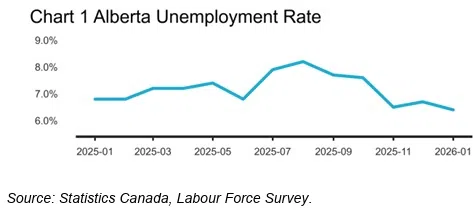
Across Alberta, the seasonally adjusted unemployment rate was 6.4 per cent in January, down 0.3 percentage points from December and 0.4 percentage points from January 2025. Month-over-month gains were largely driven by full-time employment, which increased by 41,000 from December and by 102,000 from a year earlier.
Part-time employment declined 4.7 per cent, or 21,400 positions, from December and was down 3.5 per cent, or 15,700 jobs, compared to a year earlier.
Employment gains were largely seen among youth aged 15 to 24, up 8,500, and people aged 55 and older, up 19,500. However, employment among workers aged 25 to 54 fell by 14,700.
Employment increased in nine of 16 industries in January compared to the previous month. The largest gains were recorded in construction; finance, insurance, real estate, rental and leasing; and health care and social assistance.
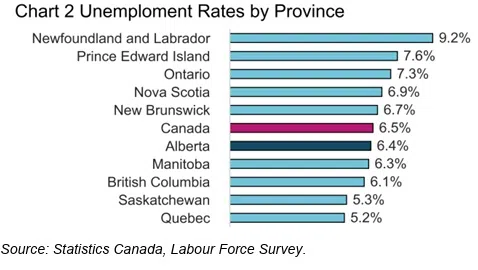
Alberta’s unemployment rate is now slightly below the national average in January and ranked as the fifth lowest in the country. Canada’s unemployment rate was 6.5 per cent, down 0.3 percentage points from December.
Unemployment rates in Alberta’s two big cities remained relatively unchanged, with Calgary at 6.5 per cent and Edmonton at 6.6 per cent.
The highest unemployment rate among Alberta regions was reported in the Lethbridge–Medicine Hat area at 6.9 per cent.
–











Comments